THE HELLP
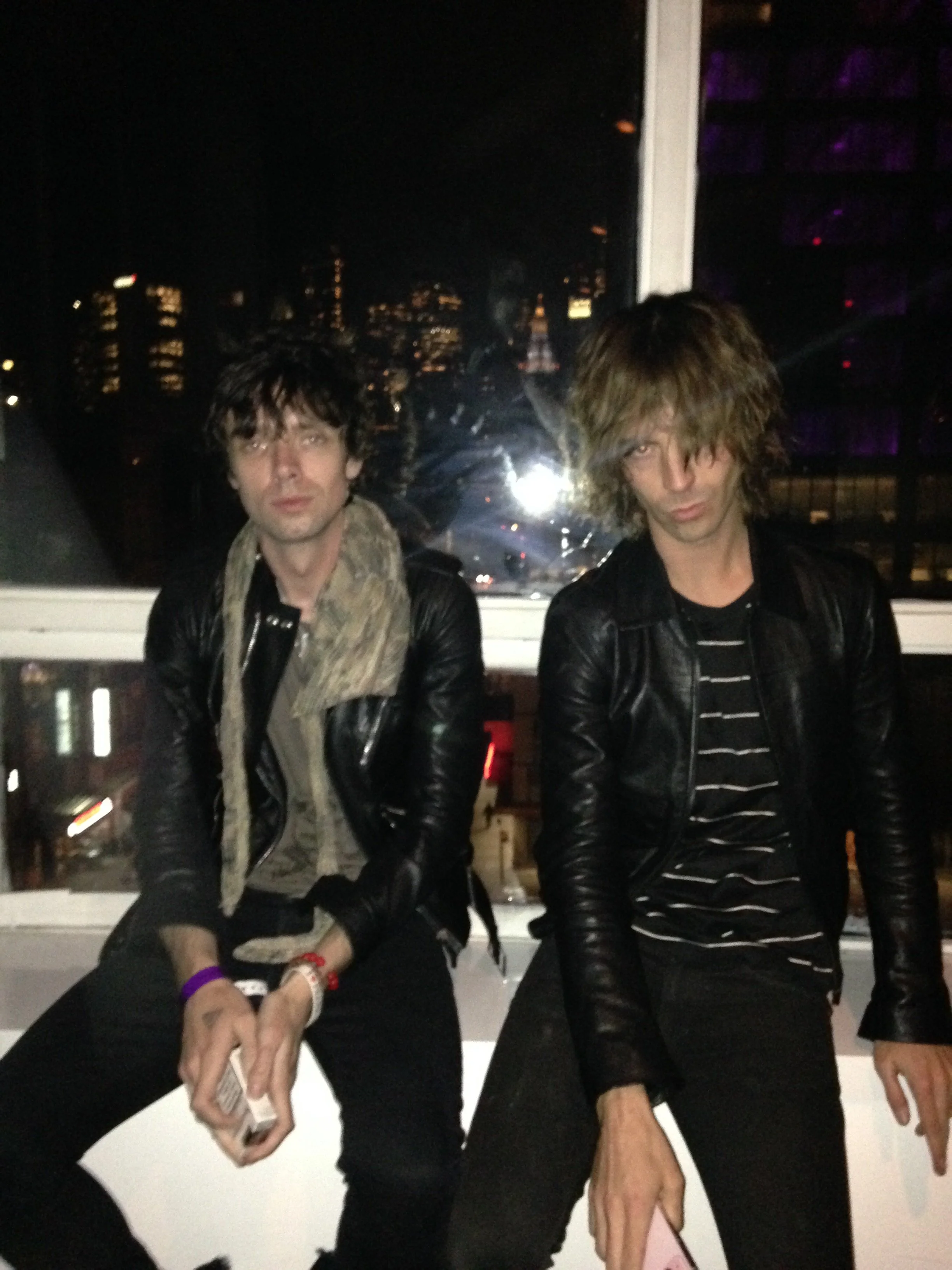
Photos by Veronica Alemu, 11.20.26, 'Riviera' Album Release Party
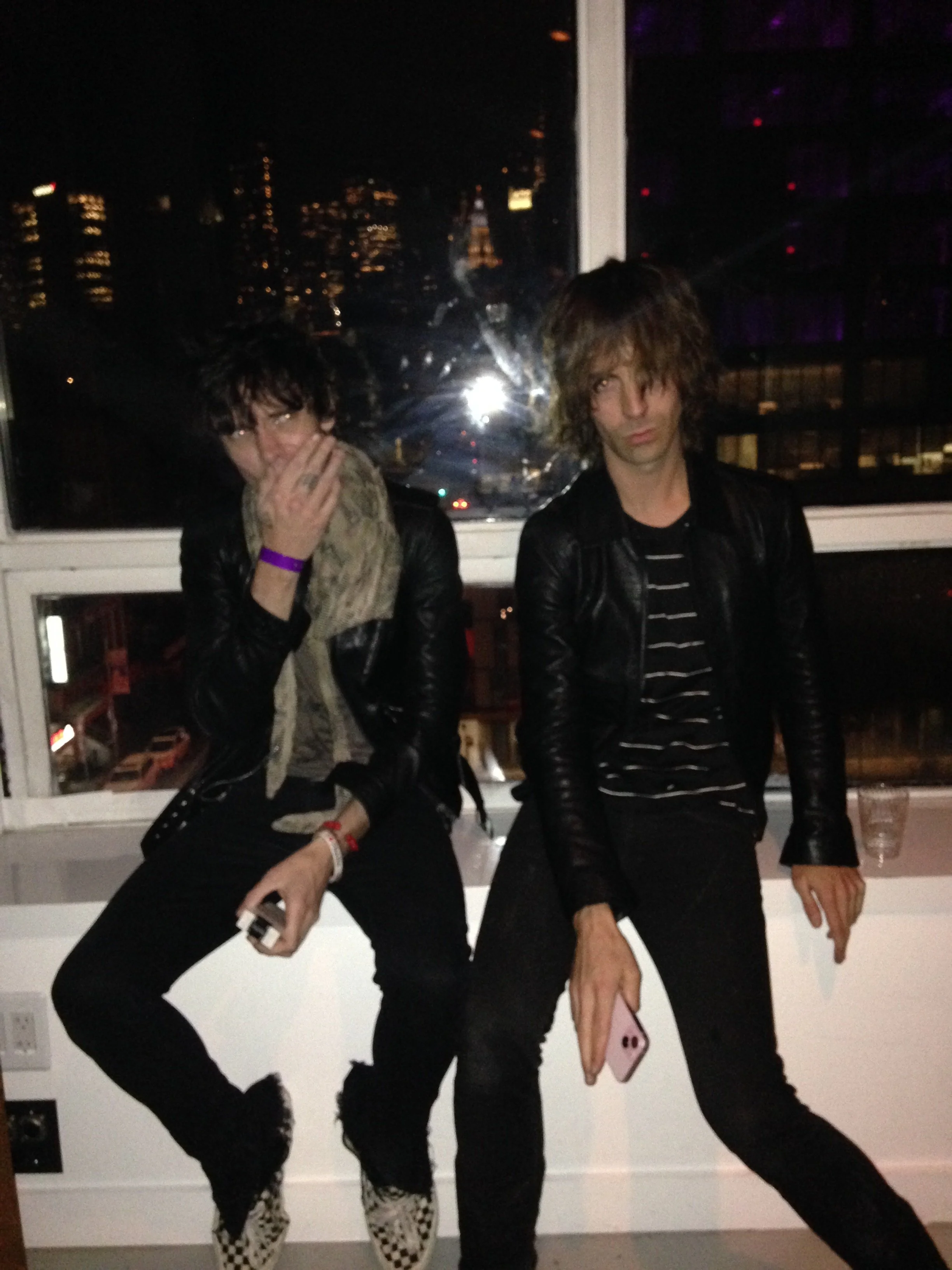
By Katie Li
February 20th 2026
In the same breath that he muses on the strange energetic imposition that instinctively pulls people’s gazes toward him, Chandler Ransom Lucy—ironically, a model-turned-musician—calls himself “kinda ugly.” His counterpart, the ever-multihyphenate multidisciplinary artist Noah Dillon, professes rather smugly, “I don’t really listen to music,” while simultaneously donning Apple’s iconic wired headphones. Incongruities steep their lyricism—take “Live Forever” from their latest album Riviera, where Dillon intones capriciously between “I wanna live forever” and “I don’t wanna live forever.”
Such is the spirit of the Hellp: a restless tension between self-aggrandizement and self-doubt, delivered with complete sincerity yet with unspoken awareness of its own paradox. Whether it’s outright contradiction, which Dillon touts as one of his personal hallmarks of a great man—Emersonian, by way of instinct—or, an evolution so perpetual it can change mid-utterance, it’s this sentiment that keeps their music in a constant state of reinvention: always experimenting, always fresh. What’s emerged in its wake is a tensile strain of indietronica trapped in an unceasing push and pull—at times, hyperactive and bravado and, at others, sleek and reflective—while sketching a distinctly American mythology of ambition, ascent, and skepticism. For the better part of a decade, they’ve been the architects of that dynamic sound, responsible for much of the contemporary electronic underground’s embrace of rock-electronic hybridity and its renewed appetite for ‘00s-era aesthetics.
THIS IS A PREVIEW FROM OUR PHYSICAL MAGAZINE EXCLUSIVE. Get your copy here to read the full editorial now!
……………………………………………………………………………..
Read our full conversation with the Hellp below.
Devout fans know you as self-critical and somewhat of perfectionists, in contrast to the pretentious allegations you sometimes get elsewhere. You’ve called a lot of your own songs bad from “Caustic” to “Sinamen,” despite working on some of them for years, and believe you guys haven’t yet fulfilled “greatness” on your own metrics. What would define greatness for you?
Defining greatness for us is being recognized as real artists. When we look back on all of this that’s what we want - we want people to appreciate what we create and we want The Hellp to be seen as a cultural marker for the time. We started and grew this project from the ground up, and we want people to recognize there is real substance to us, we both started from nothing, literally. This is kind of what Riviera is all about–this journey that we’ve gone through, how we’re our own biggest critics and how it feels to never feel like you never truly belong - we’re all disillusioned in the place we’re in.
Throughout pieces of your discography and interviews, you two often mention Jesus Christ and going to hell. What’s your relationship to organized religion and how has it impacted your music?
I’m still quite Catholic, and Chandler is spiritual. Maybe not religious, but a spiritual guy. When you are making something and you believe in god and a spiritual reality, it feels divine, the idea of you creating something or it “came from god” or “came from something greater than yourself, it inspires you to keep going and follow the path.
What were your personal references when creating this new album?
There are lots of references throughout the album, but the most prominent come in “Revenge of the Mouse Diva,” and “Country Road.” The first track, Revenge of the Mouse Diva, references both Rhonda Lieberman’s Artforum Essay, and furthermore, to Karen Kilimink and the principles of romantic tradition and consumer culture which she pulls from. Country Road also references and interpolates John Denver’s “Take Me Home, Country Roads.”
Why did you interpolate “Take me home, Country Roads”? What is your personal connection to this song?
The personal connection is that during the point when I was writing this song, there was a guy driving through a rural and desolate world, but it's a metaphor because he’s actually driving down Sunset. It’s a juxtaposition of the rural world of West Virginia (broad metaphor for America), and the isolation of the internal.
Do you see this album as a turning point for The Hellp?
We don’t look at Riviera as much of a turning point as it is the next step in our evolution. After LL, we knew we needed to make something different–we had maxed out what we had done with that sound, if we had continued to create the same thing we wouldn’t evolve. The key to what we’re doing, and what we’ve always done, is a constant evolution. We’re growing up, and our music needed to keep up with us, we knew it needed to be a bit more brooding, restrained and impassioned. Riviera is our most thoughtful work yet–it’s a mirror of who we are as people.
Did the process of making a full-length album demand a different kind of discipline, vulnerability, or pressure compared to your previous work?
No matter what length of work we’re creating, those things always exist for us. We always have to be vulnerable to create something that feels authentic to us, and there’s always pressure, at least internally, for it to be the best we can make it. Whenever you are offering art for people to consume and review, there is always pressure–we want people to like it, we want people to recognize The Hellp as real artists. I think we are disciplined in the sense of what we create, we want it to be the most perfect version of whatever it is. With an album, it does all need to be very cohesive, so you could say it feels a bit more disciplined.
Did you approach songwriting or production differently this time around?
More emphasis lyrically, and restraint–more thoughtfulness on the palette used for production.
I was at your show at Webster Hall, where you introduced some of Riviera’s songs and prefaced with “this album is a lot less bangers,” presumably in comparison to LL, which with every song people find a way to mosh to. How was the creative process/mood/goal behind the scenes different for Riviera? Is the mellower feel representative of your guys' personal lives changing as well?
This tonal shift with Riviera for us is really our music maturing with us. Like we said before, this album is about us growing up, both in our own lives and sonically. Don’t get us wrong though, there are still bangers on this album, it’s not that we’re abandoning that urgency and visceral energy from LL or even Vol. 1, we’ve just refined it into something more brooding and thoughtful. The album brings to life highs and lows, sonically. There’s menacing beats that explode into extortion of sound, and then there’s moments where the sound sinks to this uneasiness that is the feeling of disillusionment. Riviera personifies this existential thing we’re all going through–it’s really a journey through sound.